
Building an agentic software factory? Start with the sensor.
It is hard to browse tech news without seeing someone advertising the benefits of a software factory and how it enables delivering way more software than before.
Despite unresolved discussions on the quality aspect, those adopting a “software factory” approach will see the bottleneck shifting from code generation to the developer infrastructure. For example, how will your continuous integration pipeline built for human scale handle the barrage of code being produced by agents?
As this article highlights, we need to rethink the delivery lifecycle around one question: how does the factory know a change it produced works before the next thousand land on top of it?
In control theory, a closed-loop system has a desired state and a controller that acts to try to reach said state. A sensor measures the actual result and feeds that information to the controller so it can react and make adjustments (or corrections).
If that analogy is applied to the software factory, we have the following:
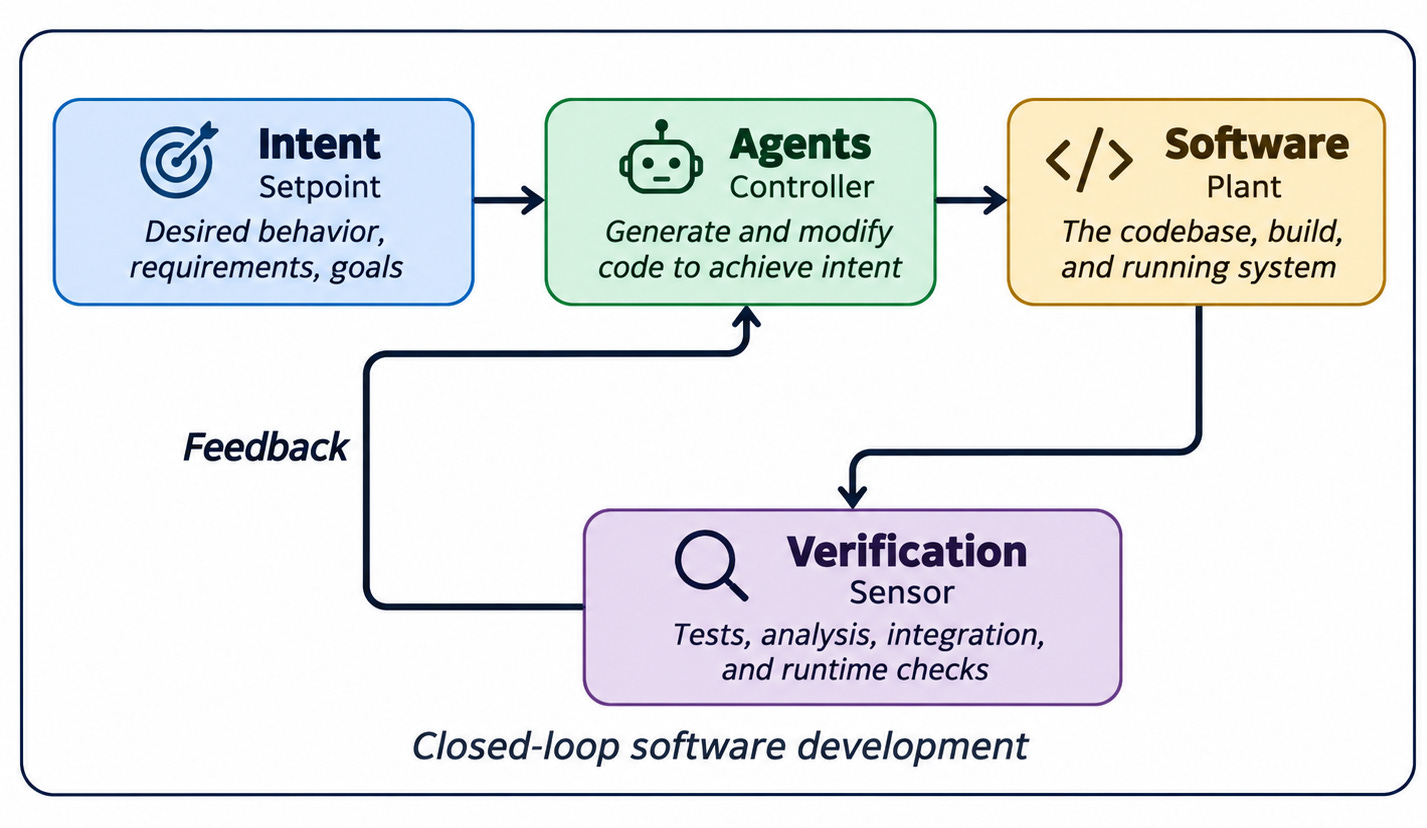
On one side, you have your intent, the list of goals/requirements for a specific feature, and at the other end, the updated software.
The sensor provides feedback, which can be all is well or some sort of regression that needs to be addressed.
In that setup, a controller that outruns the sensor is not actually going faster, as it is operating under stale information, potentially repeating or building on top of errors.
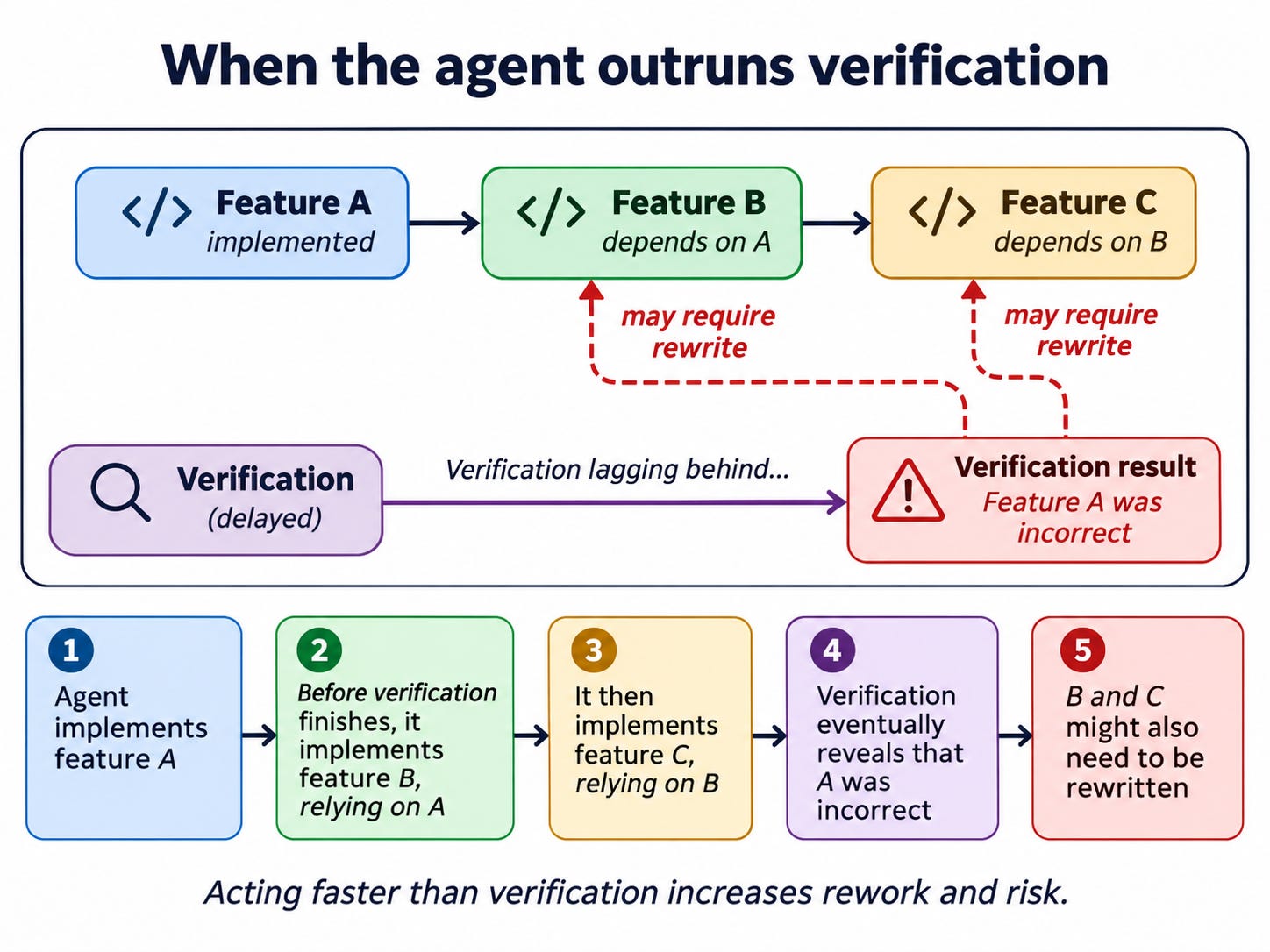
If it is not clear, you used to be the controller, and that would rarely outrun the speed of the sensor, which in our case could be the CI pipeline that ran all the automated verification. With agents, all of that changed.
You can still decide to take a speculative approach and continue to build based on the cheaper/faster unit and integration tests that leverage stubs or local stand-ins, but the potential rework can be great, so it will still end up setting how fast you can go.
No matter what approach you take, think about your sensor fares in three properties:
Latency
How long it takes to report. Track how long does it take from a change being ready to a verified result in a production-like environment
Fidelity
How close the reading matches the real system. Unit tests and stubs report against a model of the dependencies, and agents react to that as truth.
Bandwidth
How many readings a sense can take at once. If you have shared environments, that usually means 1 change can be verified at a time.
Adopting the factory method requires a shift: you no longer review the code, but instead the evidence that the intent was achieved.
In that world, a better controller (model, harness) that operates on a biased sensor reaches the wrong answer faster :)
To me, this is still an unsolved issue for which we are experimenting with different options to find the best one. Getting all 3 sensor properties adjusted at the same time is still the biggest challenge.
Database-Generated IDs Can Complicate Your System Design
If you have been developing SQL-backed applications for a while, leveraging auto-increment keys for your entities will sound familiar. You define a starting number, the increment step, and off you go, keep inserting records and get back the generated IDs.
This sounds ok and for many cases it is, but not for all, or at least with you follow that without understanding the trade-offs that come with it.
As this article highlights, creating something does not always mean a CRUD operation where the idea of persisting an ID may suggest the existence of a service to hold that information when it is not the case.
For example, in a logistics application, creating a shipment is not necessarily a short process, requiring you to leverage asynchronous processing before a shipment gets saved into the database.
To solve this, you may, for example, require the client to provide a unique identifier for what the shipment will be and perform some initial validation, but only be responsible for adding that to a messaging solution.
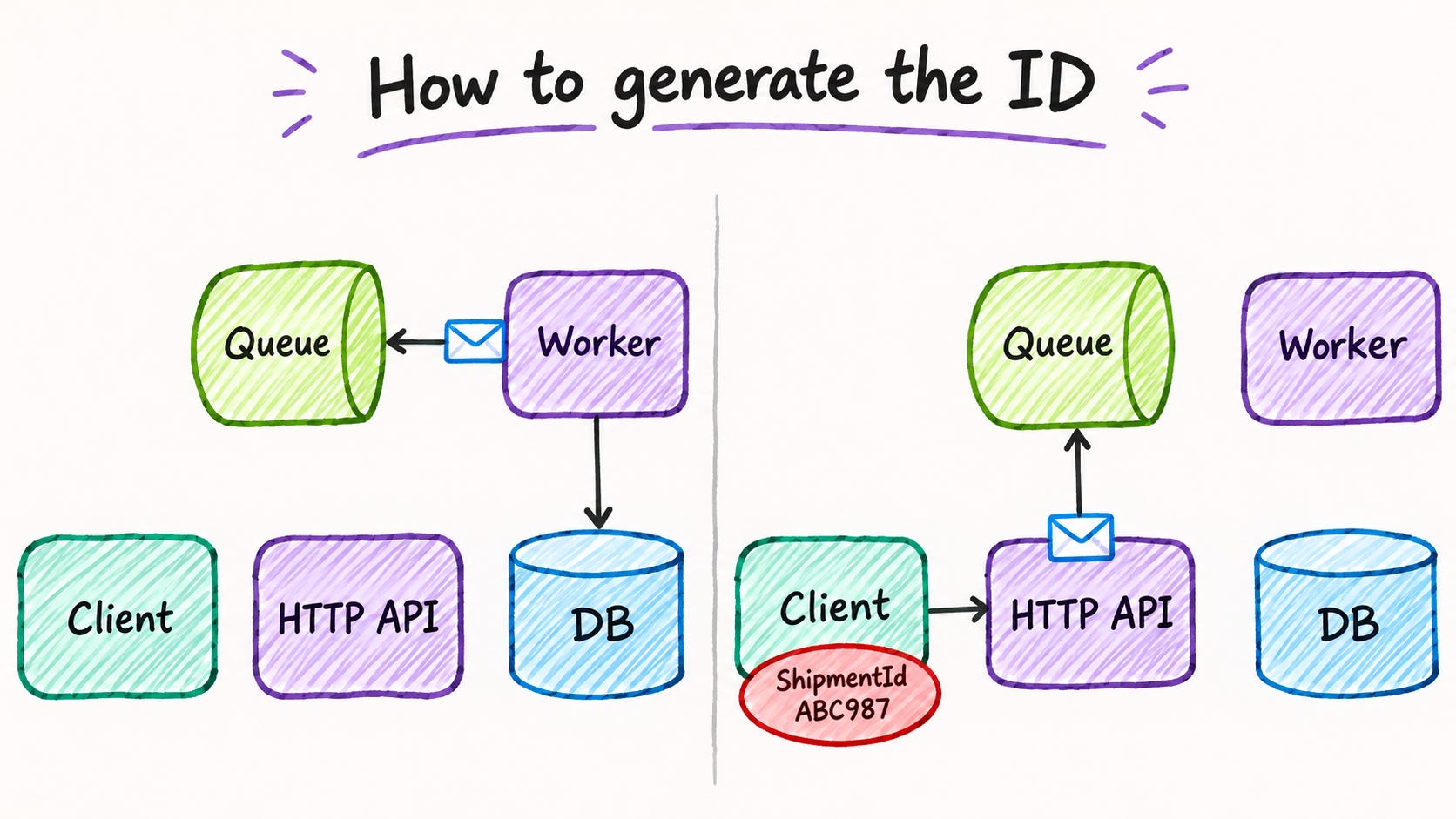
Now, consider the ramifications where there is no shipment service. Your workflow could look like this.

In this case, instead of considering a shipping service, you can think that no single boundary owns a shipment, and each one owns its part of the process itself.
In the end, you can still have a unified view of the shipment from the user’s perspective by composing the information from different boundaries.
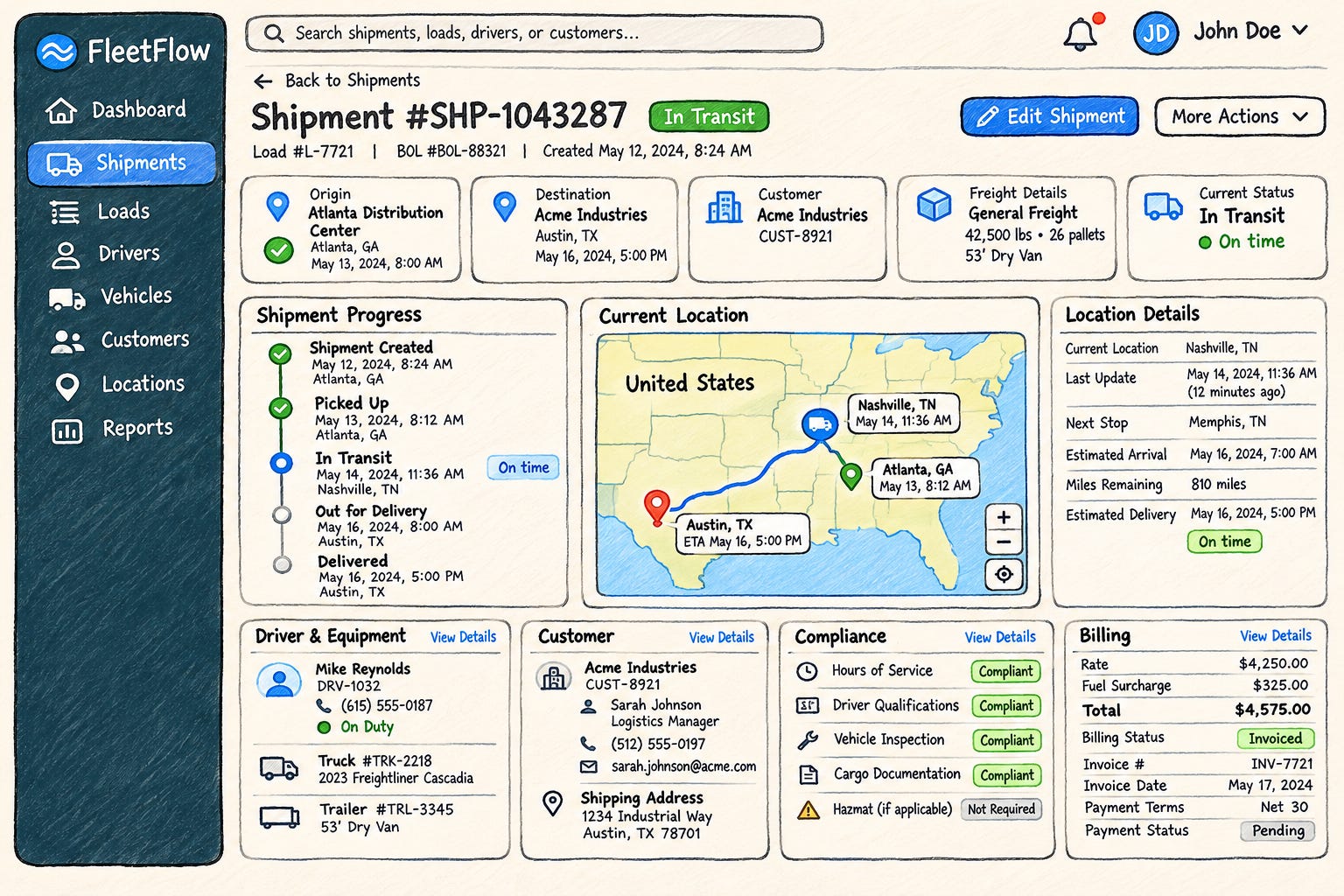
Identity connects all the pieces, instead of relying on a single service with all the aggregated data.
Ask questions about data ownership to understand (and challenge) the communication boundaries and how the many parts correlate the pieces of a longer workflow.
That will shift the focus and enable you to make decisions outside the pure CRUD/noun-service approach.
Anthropic Builds its Own Source Control System
Remember the time when Git was the undisputed source version control? These days I feel that everyone is rushing to come up with a replacement.
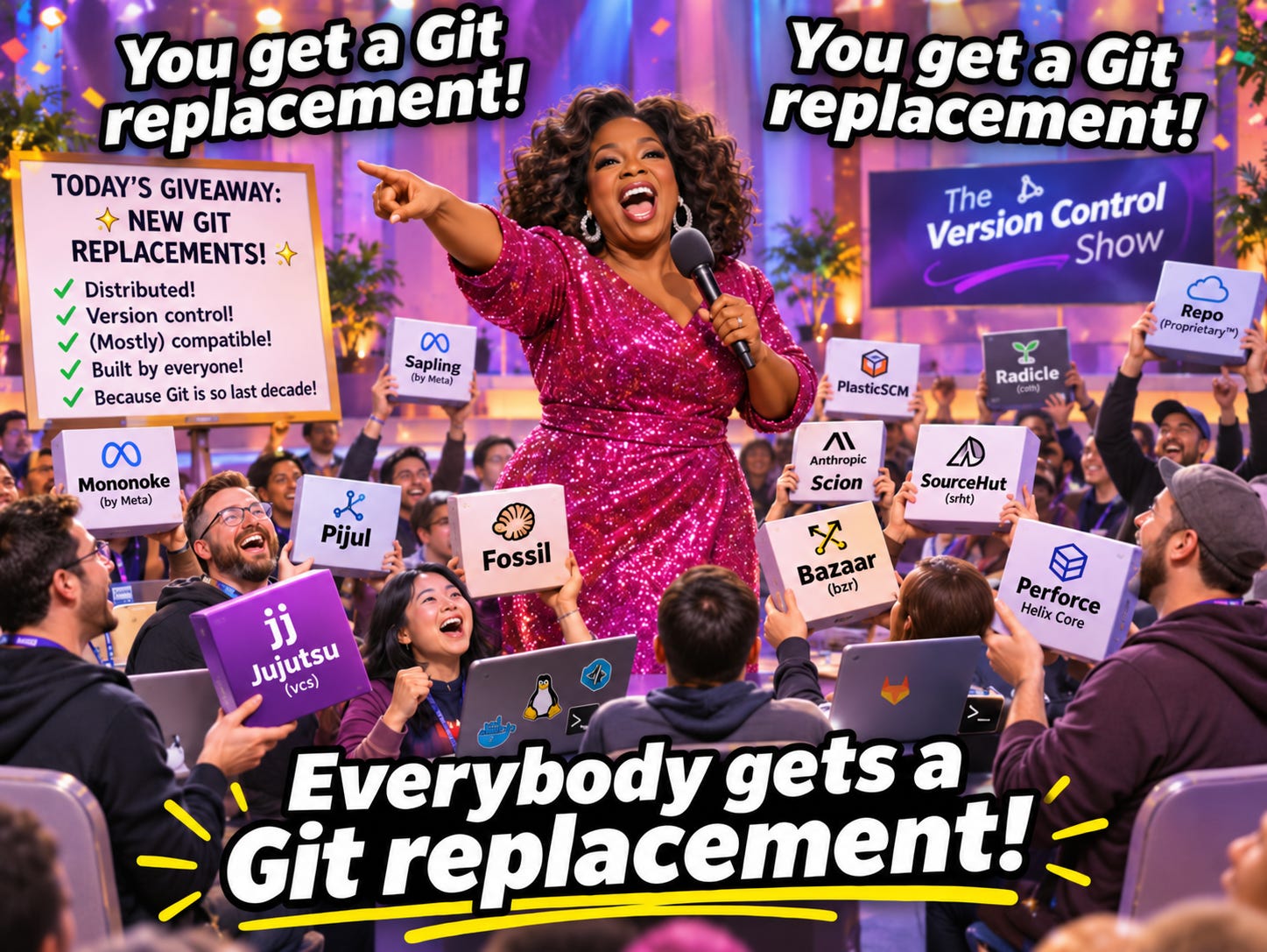
Kidding aside, the exponential growth of code contributions (due to AI) and the change in the cycle (minutes x hours) to produce code is a direct attack to the model Git was created on and its known scalability challenges.
Scion is Anthropic’s take on a Git replacement, and is the latest entry on this new wave of options.
Both the server and client are written in Rust, with the code review system (Antique) using Go + React. The latter was needed because they have departed from Git standards.
Anthropic’s motivation was the massive growth in the number of PRs per day (from 2.5K to 30K) in a few months due to the way they operate, with many parallel agents running per employee + a CI pipeline that alone performs 25 million checkouts.
Their solution: create a new option that leverages Google Spanner as a database to store changesets and blobs on Google Cloud Storage.
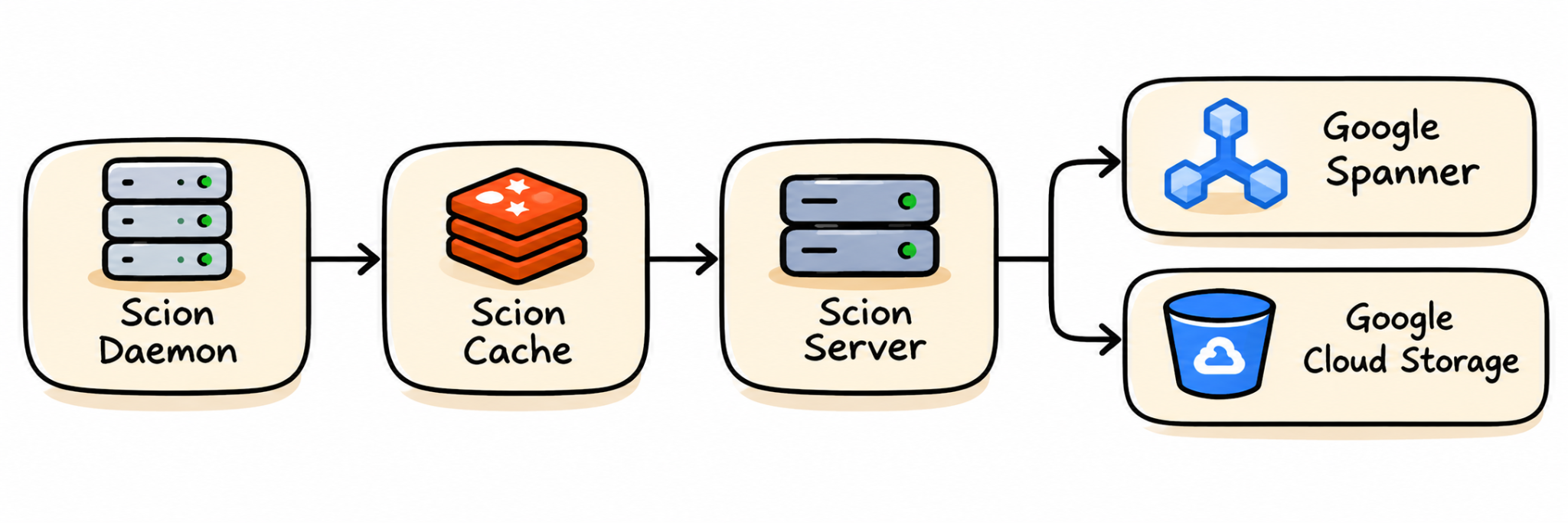
In reality, many of the big players moved away from Git for their internal tooling a long time ago. Meta and Google made that move to address similar challenges, but at a scale involving thousands more engineers than Anthropic, which apparently has an unlimited token budget.
That begs the question: will Git(Hub) have to reinvent itself to cope with the new reality? Are the days of decentralized version control over?